
If you are involved in a personal injury case, it’s good to be aware of how compensation may be calculated, and a personal injury attorney in Long Island, NY can help you correctly figure for everything you’re owed.
Actual Medical Expenses
Medical bills are the foundation of any personal injury claim as they show the actual expenses incurred from an injury. This could include from emergency room visits, hospital stays, surgeries, medications, physical therapy or other forms of rehabilitation. The cost of transportation to and from medical appointments would also be included.

Projected Medical Expenses
If an injury will likely require further medical treatment or long-term care, future medical costs could also be included in determining the value of the case. Medical experts will be called upon to help estimate the cost of future medical care in these cases. Reports from doctors and other medical professionals will help to prove the need for the ongoing care and justify the financial expense.
Lost Income
Since an injury can affect an individual’s ability to work, records showing loss of income will help to determine the financial loss. Pay stubs and work records will be considered to calculate the financial loss from reduced hours or missing work entirely after the injury.
Reduced Earning Capacity
Sometimes, an injury means that someone is unable to perform their work duties due to their injury and must find another position or another job. Any reduction in income will be taken into account in determining compensation for a personal injury claim. Financial experts may be called upon to project the financial loss due to someone’s reduced earning capacity.
Pain and Suffering
The value of a personal injury claim will also take into account the victim’s physical pain, emotional distress, the loss of enjoyment of life, and other intangible losses. These fall under the category of non-economic damages, and in the state of New York are often calculated using the “multiplier method.” The total amount of economic damages (like medical bills and lost wages) is multiplied by a number based on the severity of the injury and the impact on the victim’s life.
The Role of Liability
New York is one of 13 U.S. states that are “pure comparative negligence” states. This means that even if a victim was partly at fault, they can still receive some compensation, no matter what their degree of fault is. Their compensation will be based on their fault. For example, if it is determined that they were 20 percent at fault, their compensation will be reduced by 20 percent. But even if their percentage of fault is as high as 80 percent, they can still recover 20 percent.
Insurance Policy Limits and Defendant’s Financial Situation
Of course, the actual compensation received will be determined by how much the insurance policy can cover. If the compensation is being awarded in a personal injury lawsuit, the victim will not be able to get more from the defendant than they can financially provide.
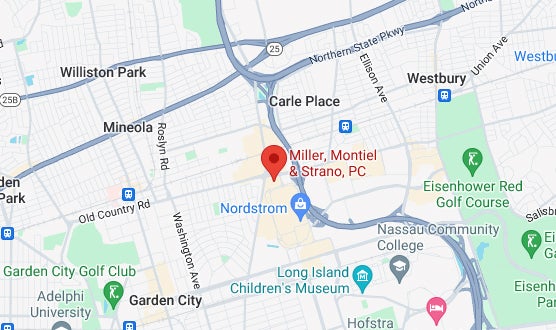
If you are involved in a personal injury case, reach out to the legal team at Miller, Montiel & Strano in Garden City, NY, for legal counsel and support in Long Island and the New York metro area.
Connect with us


- July 2026
- June 2026
- May 2026
- April 2026
- March 2026
- February 2026
- January 2026
- December 2025
- November 2025
- October 2025
- September 2025
- August 2025
- July 2025
- June 2025
- April 2025
- March 2025
- February 2025
- January 2025
- December 2024
- November 2024
- October 2024
- September 2024
- August 2024
- July 2024
- December 2023
- November 2023
- October 2023
- September 2023
- August 2023
- July 2023
- May 2023
- April 2023
- March 2023
- February 2023
- January 2023
- December 2022
- November 2022
- October 2022
- September 2022
- August 2022
- May 2022
- April 2022
- March 2022
- February 2022
- January 2022
- October 2021
- August 2021
- July 2021
- June 2021
- May 2021
- April 2021
- March 2021
- February 2021
- January 2021
- December 2020
- November 2020
- October 2020
- August 2020
- May 2020
- February 2020
- January 2020
- November 2019
- August 2019
- July 2019
- June 2019
- May 2019
- April 2019
- March 2019
- February 2019
- January 2019
- December 2018
- November 2018
- October 2018
- September 2018
- August 2018
- February 2018
Archives
- Birth Injury
- Bus Accident
- Construction Accidents
- Garden City Personal Injury Blog
- Injuries
- Law
- Motor Vehicle Accidents
- Nursing Home Abuse
- Pedestrian Accidents
- Personal Injury
- Premises Liability
- Slip and Fall Accidents
- Spinal Cord Injuries
- Traumatic Brain Injury
- Truck Accident
- Uncategorized
- Wrongful Death
Categories

-

-
We proudly support The Book Fairies, a non-profit putting books into the hands of the underserved.