
Public property injuries are a type of premises liability issue, but they come with extra steps because the government is involved. You need to act fast, talk to a lawyer, and gather solid evidence right away. Local and state governments have a duty to maintain sidewalks, parks, roads, transit stations, and public buildings, and if a dangerous condition like a broken sidewalk, icy patch, pothole, or poor lighting causes your injury—and the government entity responsible for it either knew or should have known about the condition—you may have a valid claim.
You must show the public entity owed you a duty of care, breached it by failing to fix or warn about the hazard, and that this breach directly caused your injuries. Unlike with certain private property cases, you cannot assume liability just because you fell. In many cases, the key will be proving there was notice of the hazard. This can be actual (someone told the government about the issue, and there’s a record of that report) or constructive (the government should have known about it in the ordinary course of regular inspections).
Special Rules When Suing Government Entities
Under New York General Municipal Law, you typically must file a Notice of Claim within 90 days of the injury. This written notice must explain the details of what happened, where and when the incident occurred, the nature of your injuries, and the damages you are seeking. If you don’t file this notice within the required timeframe, you may lose your right to pursue compensation.
A typical Notice of Claim includes information such as:
- The date, time, and exact location of the incident
- A description of the dangerous condition that caused the injury
- How the accident occurred
- The injuries sustained
- The name of the injured person
- A general description of the damages being claimed
Although the Notice of Claim does not need to include every piece of evidence or every legal argument, it should be accurate and complete. Missing information or errors can create unnecessary obstacles later in the claims process.
After the Notice of Claim is filed, the government entity generally has 30 days to request a hearing under General Municipal Law § 50-h, where the injured person may be asked questions about the incident before a lawsuit can proceed. In most cases, you then have one year and 90 days from the date of the accident to file a lawsuit against a city, county, town, or village. This deadline is significantly shorter than the three-year statute of limitations that typically applies to personal injury claims against private property owners.
Different Government Agencies Have Different Rules
One of the biggest mistakes injured individuals make is assuming every government agency follows the same procedures. In reality, filing requirements can vary depending on who owns or maintains the property where the injury occurred.
For example, claims involving the New York City Transit Authority (NYCTA) generally require a Notice of Claim within 90 days, but the Transit Authority has its own procedures and requirements that differ from those of the City of New York. Similarly, counties, towns, villages, school districts, and other public authorities may each have their own rules governing where and how a Notice of Claim must be served.
Determining the correct government entity is critical. A sidewalk, roadway, park, or transit station may be maintained by a city, county, state agency, or public authority. Filing your claim with the wrong agency can result in delays—or worse, dismissal of your claim.
Federal property, such as a United States Post Office or other federally owned buildings, is governed by the Federal Tort Claims Act, which follows an entirely different administrative claims process and deadlines.
Because identifying the proper defendant is not always straightforward, consulting an experienced attorney as soon as possible can help ensure your claim is directed to the correct agency from the start.
Common Mistakes That Can Prevent a Successful Claim
Government claims are highly procedural, and even otherwise valid cases can be dismissed because of technical errors. Some of the most common pitfalls include:
- Missing the 90-day Notice of Claim deadline
- Filing the Notice of Claim with the wrong government agency
- Naming the wrong defendant in the claim or lawsuit
- Providing inaccurate or incomplete information about the accident
- Failing to preserve evidence such as photographs, witness information, or medical records
- Waiting too long to speak with an attorney
While courts may, in limited circumstances, allow a late Notice of Claim, these requests are discretionary and far from guaranteed. It is always safest to assume the 90-day deadline is firm and act immediately after an accident.
From a New York Accident Lawyer: Building a Strong Claim
To improve your chances of recovering compensation:
- Work with experienced counsel who has handled claims against cities, counties, and other government entities.
- Report the dangerous condition as soon as possible if it has not already been documented.
- Photograph the accident scene before the condition changes or is repaired.
- Save every piece of evidence, including medical records, receipts, and correspondence.
- Keep a daily journal documenting your pain levels, limitations, and how the injury affects your daily life.
- Attend all medical appointments and follow your treatment plan.
- Avoid discussing your case with insurance representatives or government investigators before consulting your attorney.
Taking these steps early can help preserve important evidence and strengthen your claim.
Don’t Wait to Protect Your Rights
You have real rights when you’re injured on public property, but the process is time-sensitive, and the procedural requirements are far more complex than in a typical premises liability case. Missing a deadline or filing against the wrong government entity can jeopardize an otherwise valid claim.
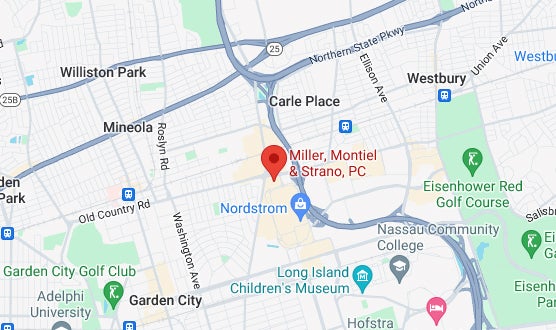
If you’ve been injured on public property, contact Miller, Montiel & Strano, PC at 516-363-5003 as soon as possible. Our attorneys have decades of experience representing injury victims throughout New York and understand the unique rules governing claims against government entities.
Not sure whether your Notice of Claim has been prepared correctly or whether you’ve identified the proper government agency? Contact us today for a free Notice-of-Claim review. We’ll evaluate your situation, answer your questions, and help you take the next steps to protect your rights before critical deadlines expire.
Connect with us


- August 2026
- July 2026
- June 2026
- May 2026
- April 2026
- March 2026
- February 2026
- January 2026
- December 2025
- November 2025
- October 2025
- September 2025
- August 2025
- July 2025
- June 2025
- April 2025
- March 2025
- February 2025
- January 2025
- December 2024
- November 2024
- October 2024
- September 2024
- August 2024
- July 2024
- December 2023
- November 2023
- October 2023
- September 2023
- August 2023
- July 2023
- May 2023
- April 2023
- March 2023
- February 2023
- January 2023
- December 2022
- November 2022
- October 2022
- September 2022
- August 2022
- May 2022
- April 2022
- March 2022
- February 2022
- January 2022
- October 2021
- August 2021
- July 2021
- June 2021
- May 2021
- April 2021
- March 2021
- February 2021
- January 2021
- December 2020
- November 2020
- October 2020
- August 2020
- May 2020
- February 2020
- January 2020
- November 2019
- August 2019
- July 2019
- June 2019
- May 2019
- April 2019
- March 2019
- February 2019
- January 2019
- December 2018
- November 2018
- October 2018
- September 2018
- August 2018
- February 2018
Archives
- Birth Injury
- Bus Accident
- Construction Accidents
- Garden City Personal Injury Blog
- Injuries
- Law
- Motor Vehicle Accidents
- Nursing Home Abuse
- Pedestrian Accidents
- Personal Injury
- Premises Liability
- Slip and Fall Accidents
- Spinal Cord Injuries
- Traumatic Brain Injury
- Truck Accident
- Uncategorized
- Wrongful Death
Categories

-

-
We proudly support The Book Fairies, a non-profit putting books into the hands of the underserved.